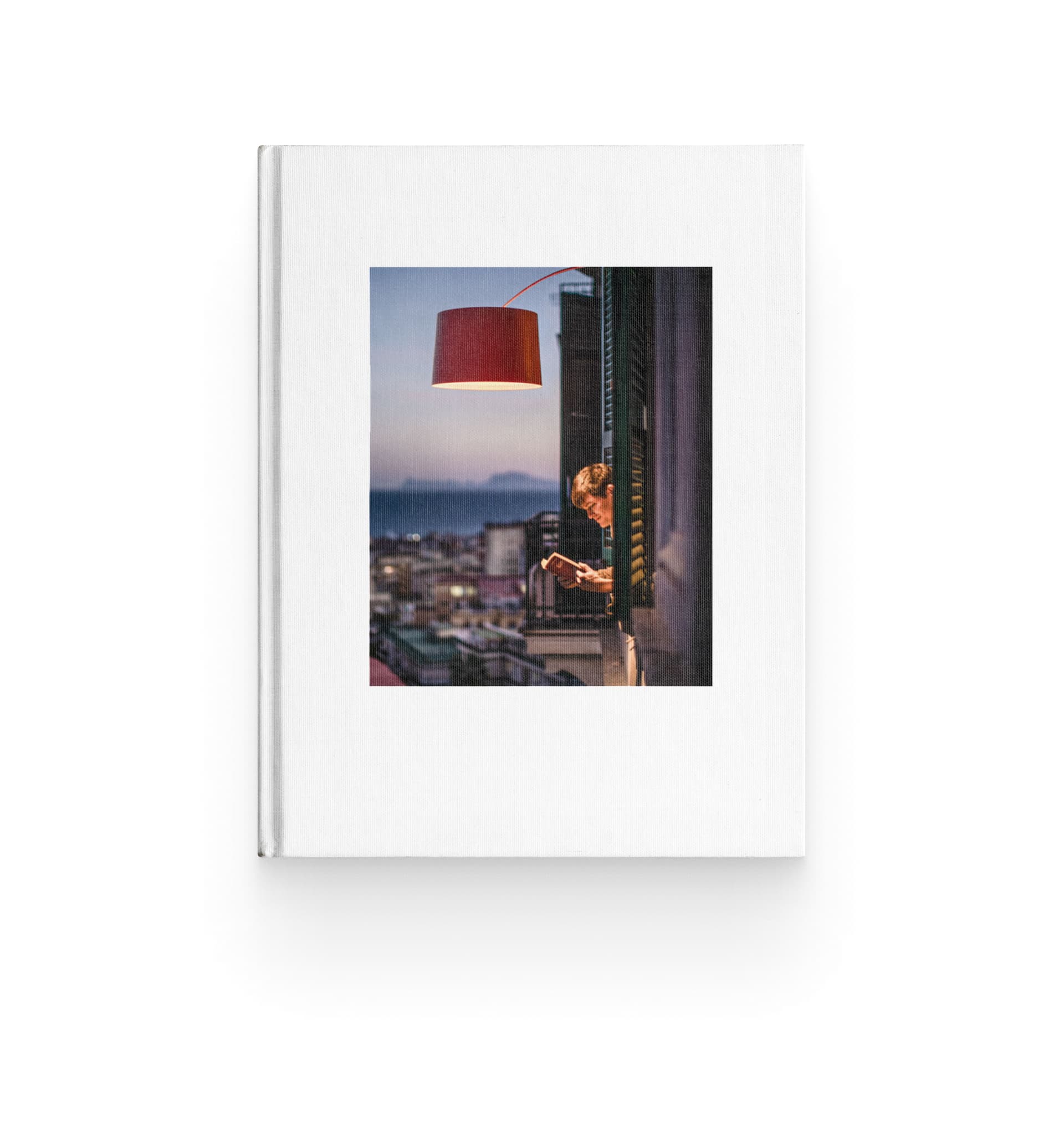
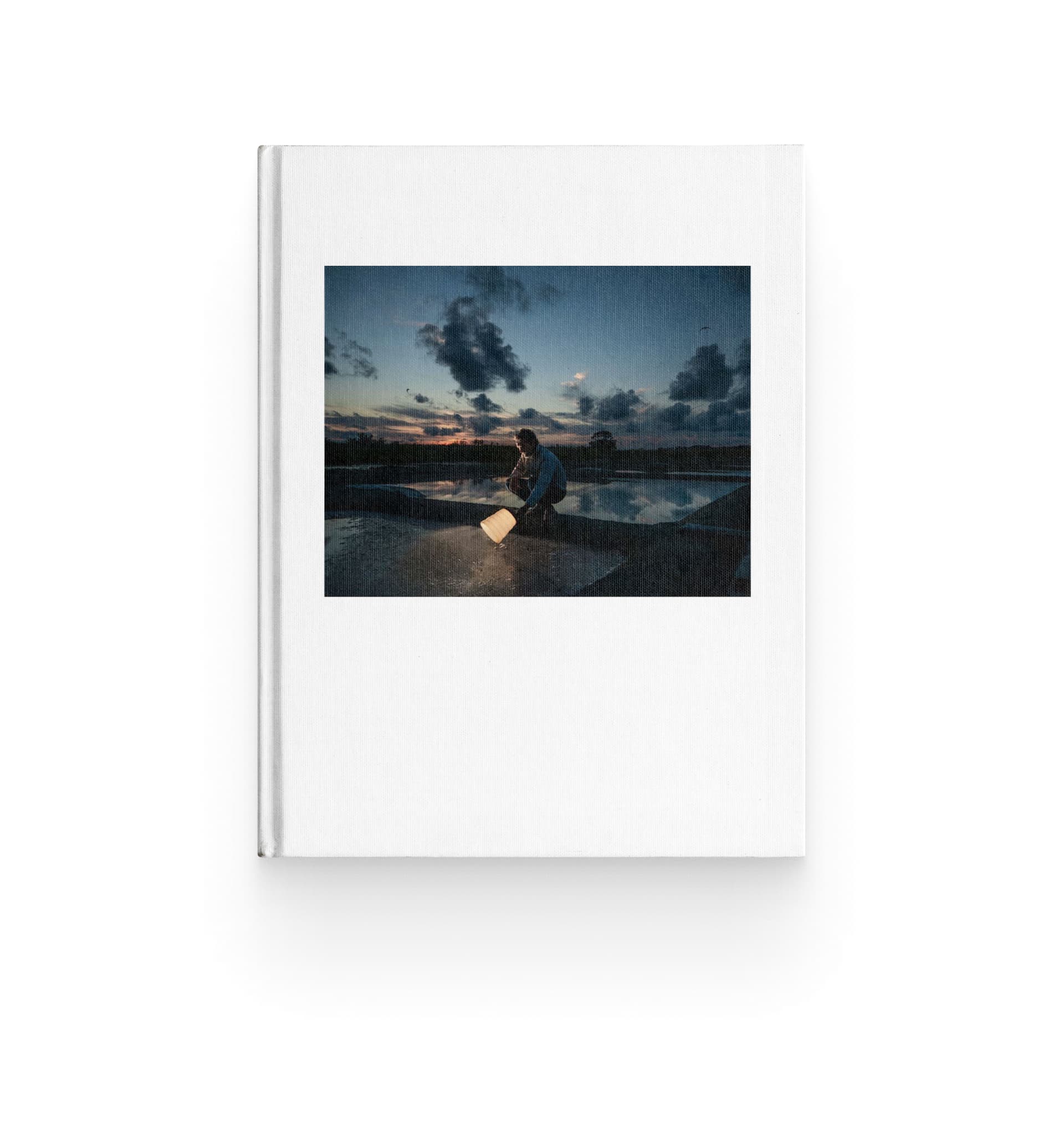
“I draw things that speak to me”: Javi Aznarez for What’s in a Lamp?
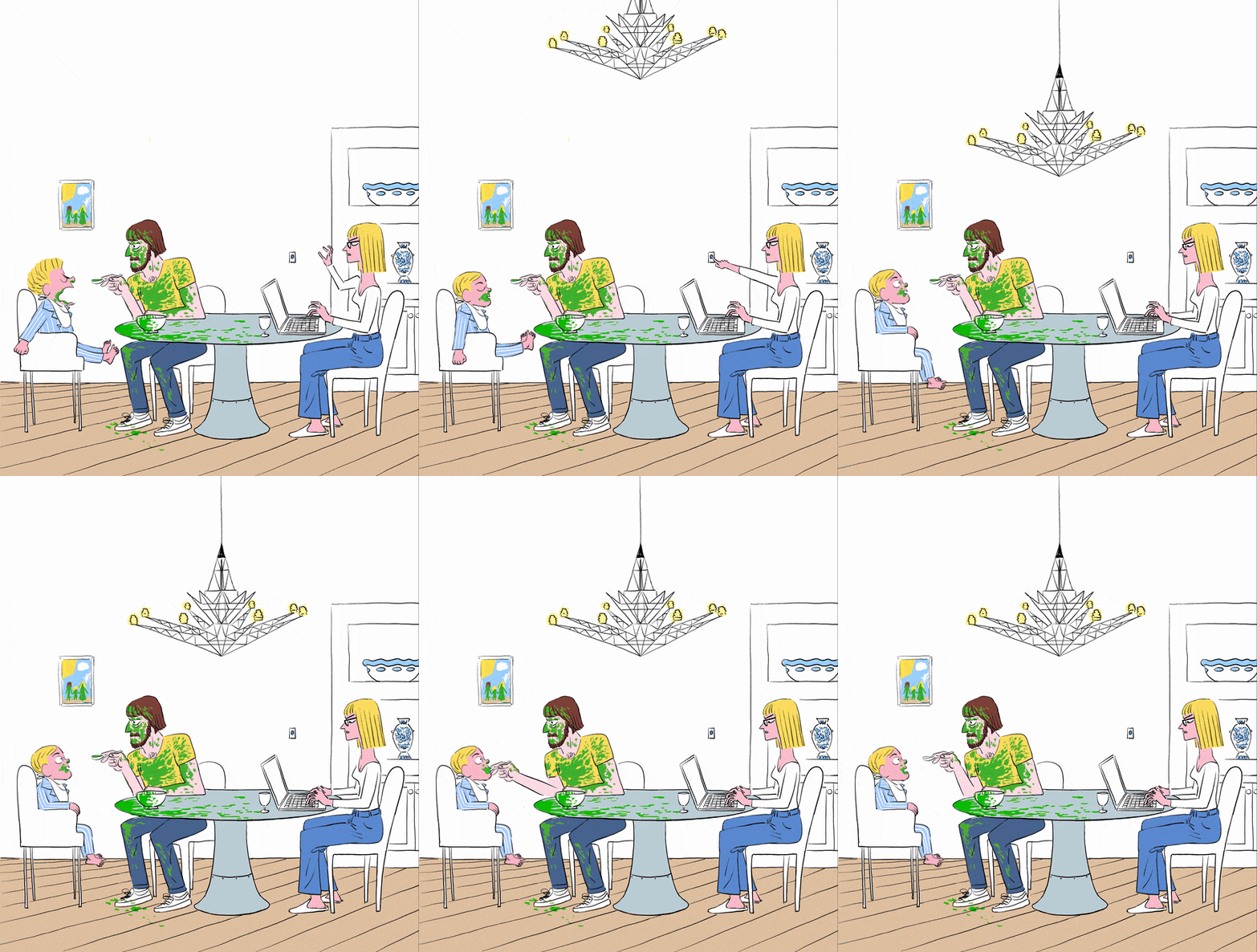
In the small, theatrical stage sets of Spanish illustrator and Wes Anderson collaborator Javi Aznarez, a story rich in detail, humanity, and subtle, biting irony comes to life around every Foscarini lamp.
“It was like walking into a party without knowing anyone and instinctively choosing the people to start chatting with”. That’s how Javi Aznarez, Spanish illustrator, creator of countless cover illustrations for The New Yorker, and collaborator of Wes Anderson, describes his first encounter with Foscarini lamps.
Because for Aznarez, lamps—much like people—have character: there are “those that stand out right away and those that are more reserved,” opening up only later; those with essential shapes and those that are bolder, almost extravagant. And he enjoys drawing this variety because, as he puts it, “just like with people, it’s nice to have a bit of everything around us”.
Curiosity, attention, and empathy are therefore the key elements of his working method. Behind the immediacy of the visual stories he creates—small theatrical sets crowded with details, where every gesture and object has its place—there is always something more that prompts the viewer to pause a moment longer. Something born from a deep understanding of the object and the character, connected to the viewer’s world: contemporary feelings, human tensions, desires, and contradictions. And always, that touch of light irony (at times overtly grotesque beneath the elegant surface of the drawing) that allows him to avoid any slide into moralism or heavy-handedness
What inspired you for What’s in a Lamp?
Looking at the Foscarini lamps, some immediately seemed friendly to me, while others coldly ignored me. So, we started chatting with a few right away, and ideas came easily. I’m sure a certain physical attraction played a role too, though not always: a couple of lamps seemed a bit odd at first, but then turned out to be fun and witty. It was a bit like walking into a party where you don’t know anyone—at some point, you start talking to someone, and everything just flows.
Your illustrations often look like small stage sets, filled with details and narrative clues: where do you start when creating a scene?
I start with a very basic sketch, where I establish the perspective and a composition that allows me to place all the elements. When images are very detailed, I try to make them easy to read and ensure the composition guides the viewer’s eye through the drawing.
There is always a running thread of irony in your work, even with serious or melancholic themes: how important is humor in how you tell a story?
It’s fundamental. I like finding the absurdity in every situation, no matter how dramatic it might be. Sometimes I’m forced to draw very serious, elegant, and terribly boring scenes, but as I draw them, I imagine grotesque situations that make the process more fun for me. It’s something very subtle—a glance, a foot touching another—and it’s certainly not obvious in the finished drawing, but in my head, those distinguished characters at the back of the bar are planning an office orgy.
You worked closely with Wes Anderson on The French Dispatch: what did you take away from that collaboration?
I learned a lot from Wes, especially how to make an idea clear at a single glance. For the first two years, I drew everything by hand, but slowly the scenes grew more complex: I had to draw a huge number of characters and buildings, and doing that by hand was very difficult—especially when changes happened and I had to rearrange the whole composition—so I started working with a graphics tablet. I haven’t stopped using it since. While working on the movie posters, I decided to eliminate depth and perspective from the buildings to keep the focus entirely on the details. It was there, with Wes, that I started drawing those theatrical stage sets.
What was the first thing that struck you about the Foscarini lamps you illustrated? And how did you choose them?
I liked the contrast between very simple lamps with essential shapes and very unusual ones with bolder designs. I enjoyed drawing both types—just like with people, it’s good to have a bit of everything.
How much does detail—a small gesture, a secondary object, an expression—matter in creating the atmosphere of an illustration?
Everything happening in the illustration matters. If I draw 200 people, I want each one to have their own personality; every object and line in the drawing has its place. I spend a lot of time making sure every detail works. I know full well that few people will pause for more than a few seconds to look at the drawing, but I see everything, and when something is superfluous or out of place, it bothers me.
Which lamp made you feel the most free while working, or which one surprised you the most with the direction it led you in?
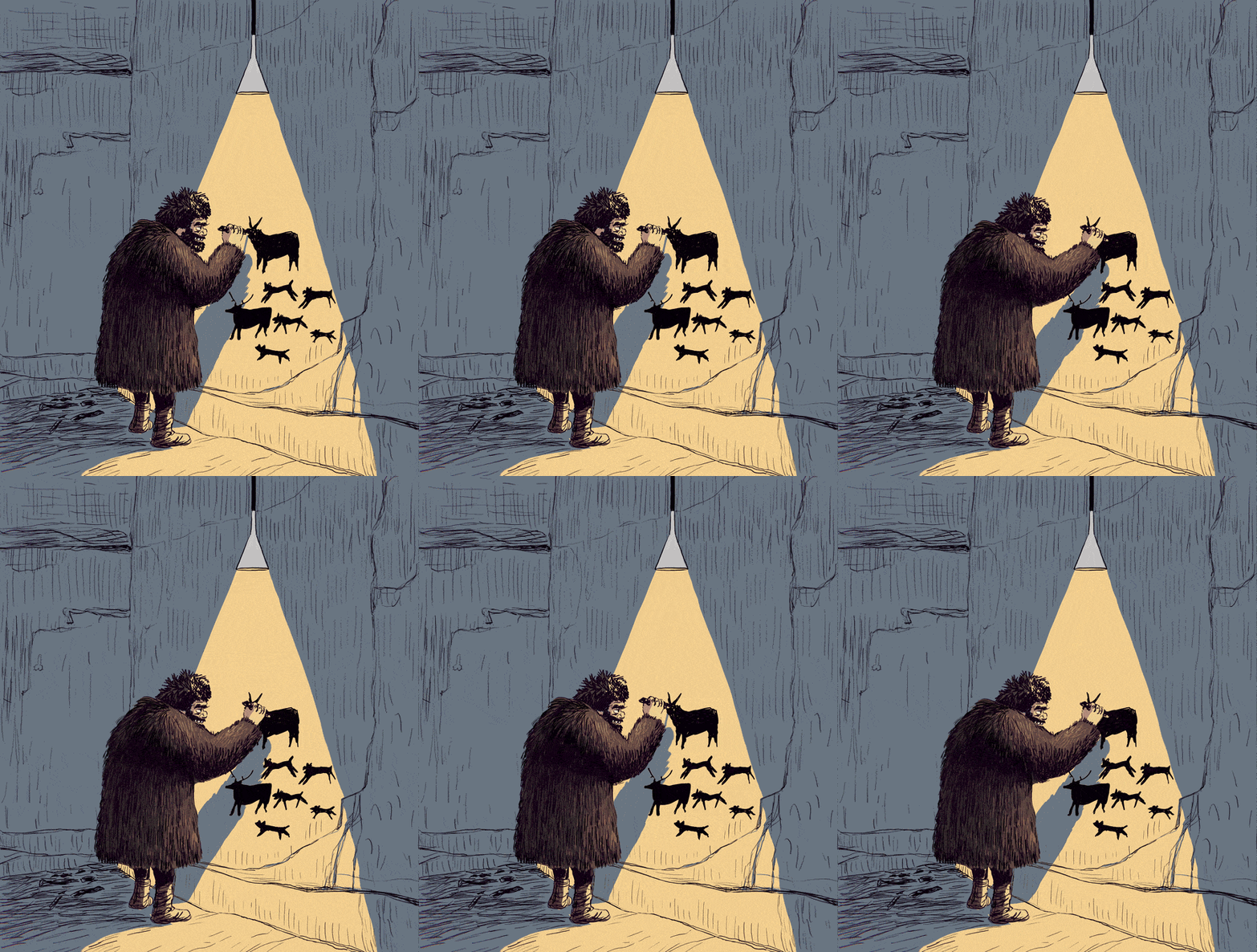
I felt very free in the high-mountain scene. I perceived Birdie as a very lightweight lamp that you could take anywhere. Then I was surprised by how the idea of the caveman came about: Aplomb is visually a simple lamp, but it inspired my best idea.
What is the most important quality for an illustrator today?
Today more than ever, an illustrator must have personality—be themselves—otherwise, a machine will do it faster, cheaper, and better.
What is creativity to you?
Same as above: it’s about being yourself and finding the best way to express that uniqueness.
Discover the collaboration with Javi Aznarez and the full series on the Instagram channel @foscarinilamps, and explore all interpretations of the What’s in a Lamp? project, where international artists are invited to freely interpret light and Foscarini collections.

In the hands of multimedia artist David Szauder, Foscarini’s lamps awaken, dance, and transport us elsewhere. In a Ballet Mécanique that is at once classic and radically contemporary.

Under the light of Foscarini lamps, stories are born. These are the moments when light stops being decor and becomes Home.

For What’s in a Lamp?, Frelly builds a series of images in which each Foscarini lamp becomes a hat to be worn, turning design objects into living presences that reshape the space around the people who wear them.

Silent images, domestic settings, a light that sparks unexpected possibilities. For What’s in a Lamp?, Marianna Tomaselli creates a series of illustrations in which Foscarini lamps become the starting point of a visual narrative, where light generates relationships, atmospheres, and subtle shifts in meaning.

Illustratore, animatore e storyteller Brian Rea entra nell’universo di What’s in a lamp? trasformando le lampade Foscarini in presenze vive, intime e silenziose. Un progetto dove luce e personaggi dialogano con delicatezza, sorpresa e immaginazione.

A project by Massimo Gardone for Foscarini investigates the potential of artificial intelligence as a tool of expression, but always guided by a sensitive, conscious human touch. A story in which technology is a means of amplifying the human gaze, where settings generated by AI contain lamps photographed in their physical presence.

For What’s in a Lamp?, Spanish illustrator and art director Jorge Arévalo portrays Foscarini’s lamps and designers with his unmistakable style: essential lines, bold colours, and graphic elegance. A suspended dialogue between the object of design and the mind that imagines it.
For the What’s in a Lamp? project, Italian artist Beppe Conti imagines lamps not simply as sources of light, but as instruments that reveal the invisible. In his digital collages, fragments and hidden layers emerge from the darkness, shaped by the light of Foscarini lamps into dreamlike spaces.

With his unmistakable style defined by essential shapes and bold colors Peter Grundy transforms Foscarini lamps into visual archetypes of the concepts and values that define the brand’s identity for the editorial project What’s in a Lamp?. An exercise in synthesis and vision that invites us to see light not only as a source but as meaning itself.

Helen Musselwhite’s artistic universe is made of paper cutouts, folds, and shadows that narrate the wonder of the natural world. For What’s in a Lamp?, the artist reinterprets some of Foscarini’s lamps, transforming them into dreamlike paper landscapes.