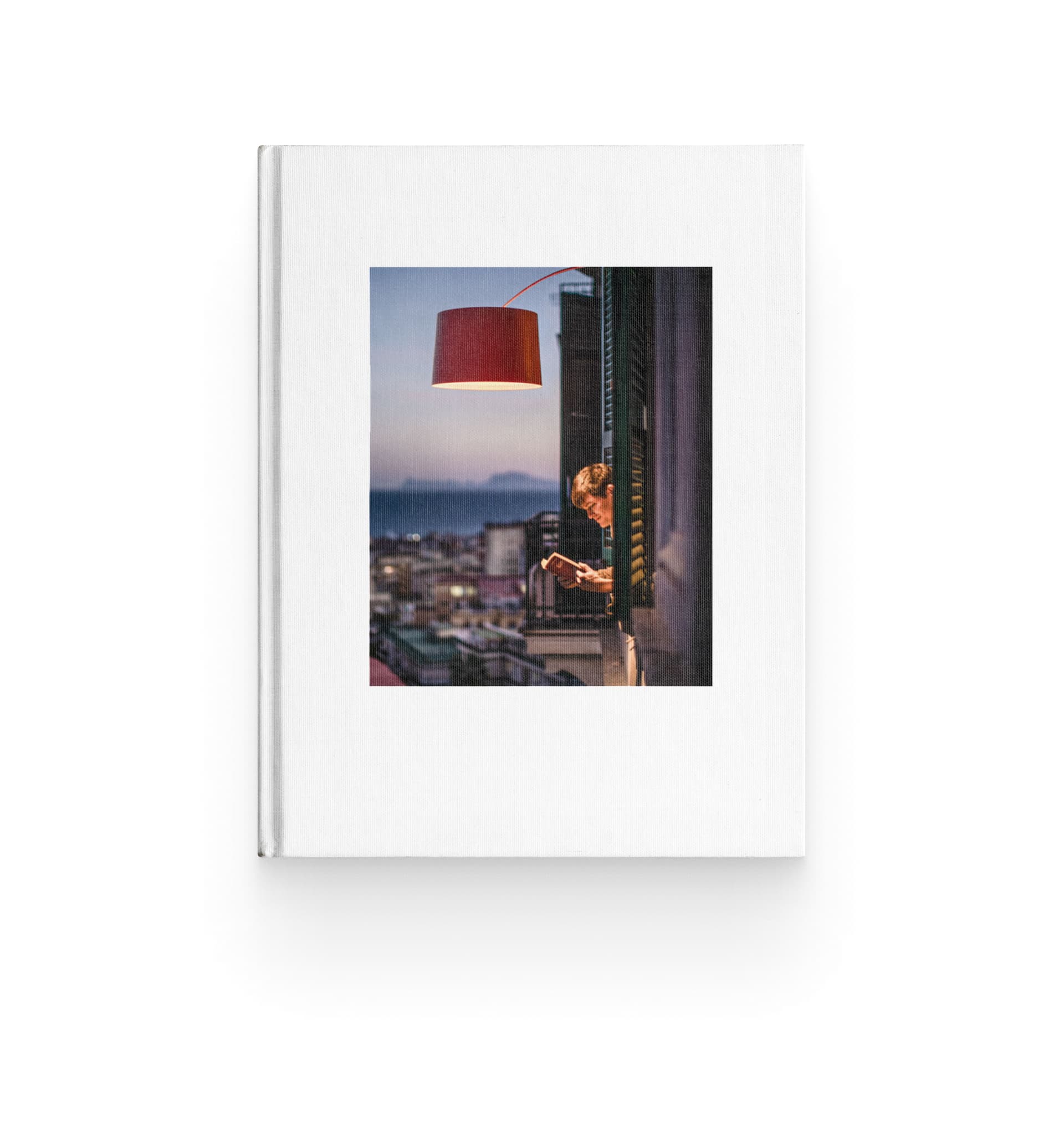
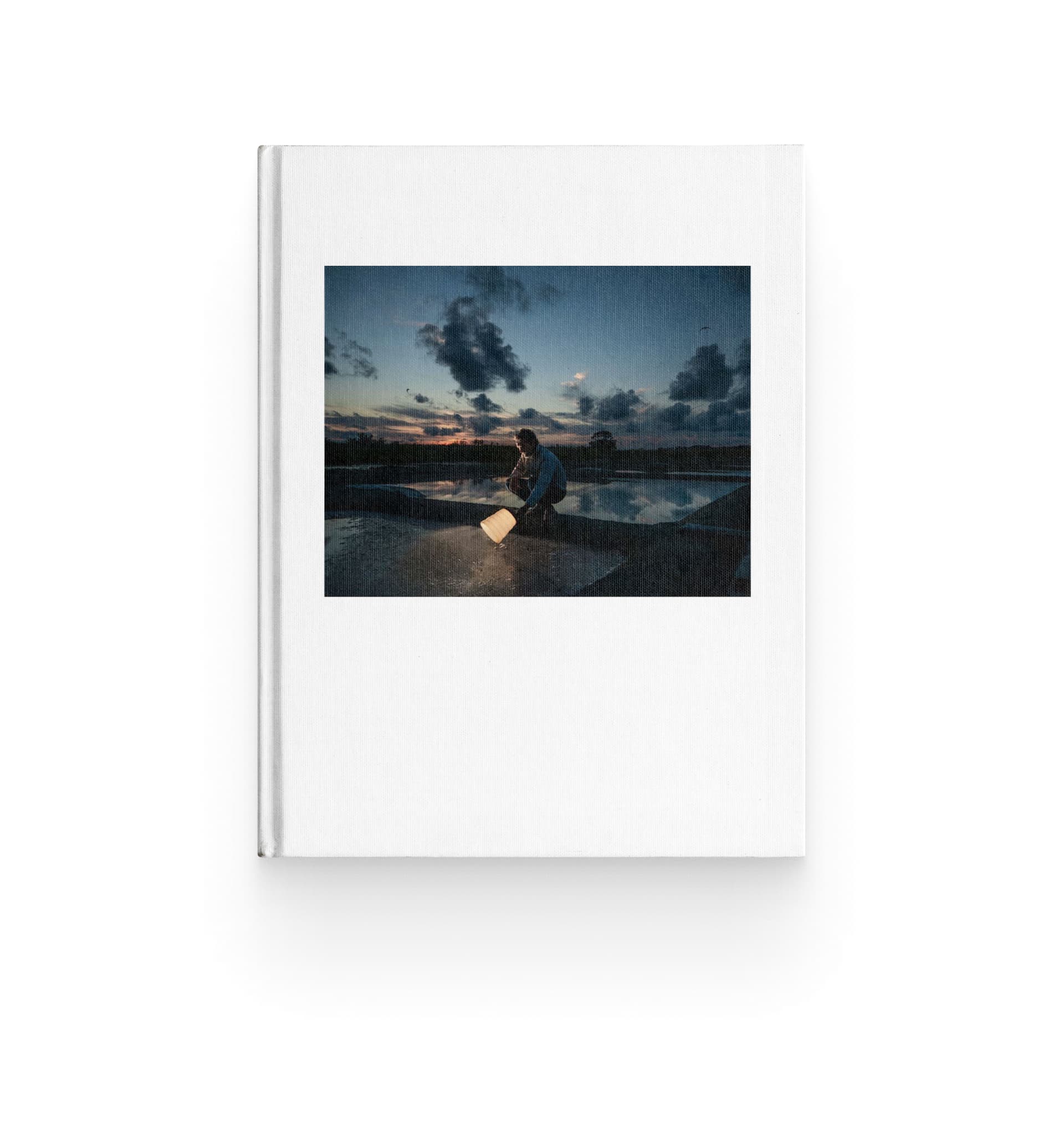
The characters that live in the dark and the warmth of light in Brian Rea’s animated stories

Illustrator, animator and storyteller Brian Rea enters the world of What’s in a lamp?, transforming Foscarini lamps into living, intimate and quiet presences. A project where light and characters engage in a dialogue shaped by delicacy, surprise and imagination.
An illustrator and animator, Brian Rea has long built his work around intimate, everyday stories, told through an essential visual language that nonetheless carries strong emotional resonance. His visual approach moves naturally between illustration, animation and storytelling, maintaining a careful balance between formal simplicity and narrative depth. He lives in Sweden, a place where light – and its absence, especially during the long winter months – takes on a powerful cultural and emotional significance.
It is precisely from here that his contribution to What’s in a lamp? takes shape: Foscarini’s editorial project that invites international artists to creatively reinterpret the brand’s lamps through their own perspective. Brian Rea begins with a question that is as simple as it is powerful: what if the characters that inhabit the dark were curious about the light? What would they look like? How would they react when faced with a lamp that suddenly turns on? And what kind of relationship would emerge between them?
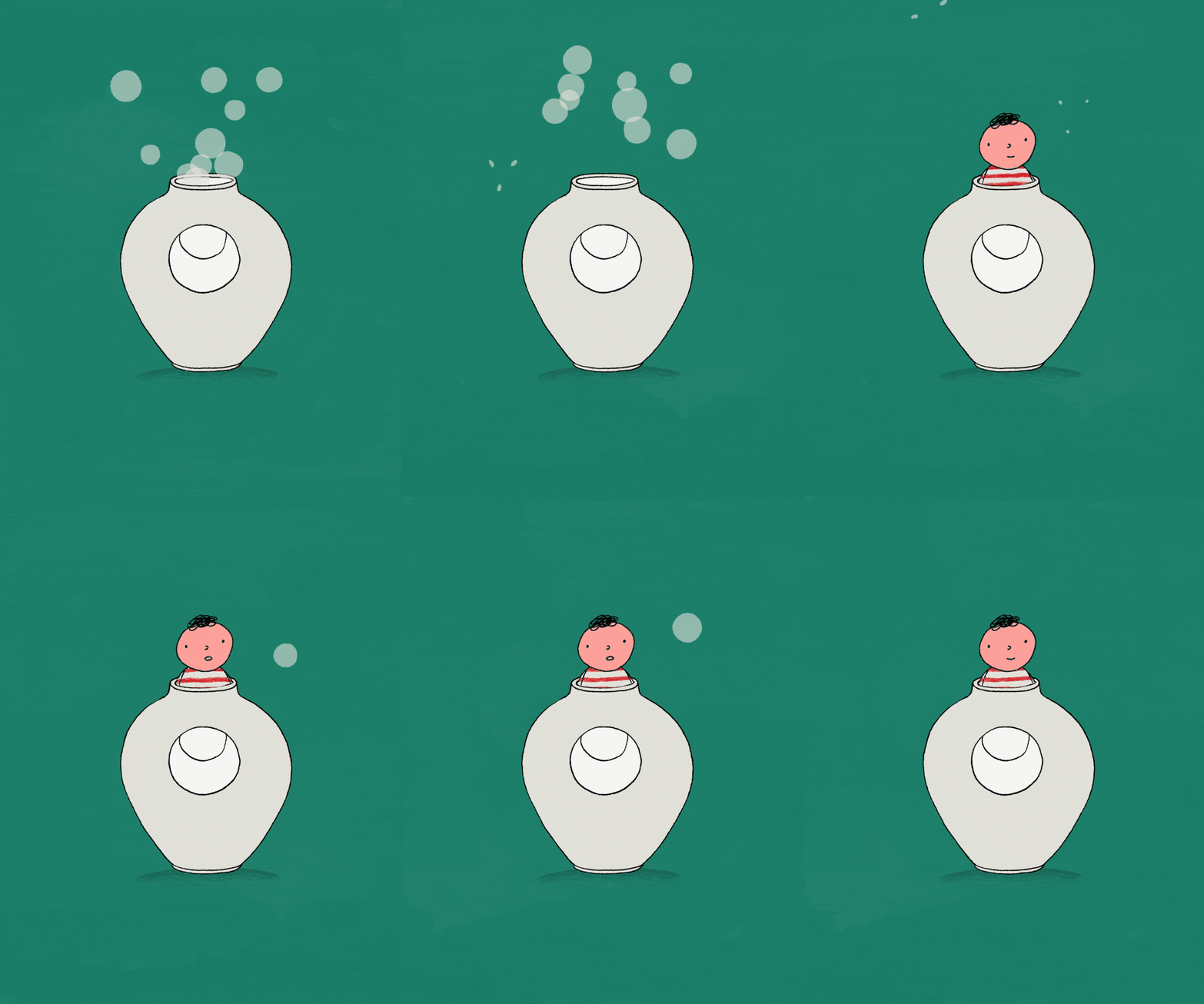
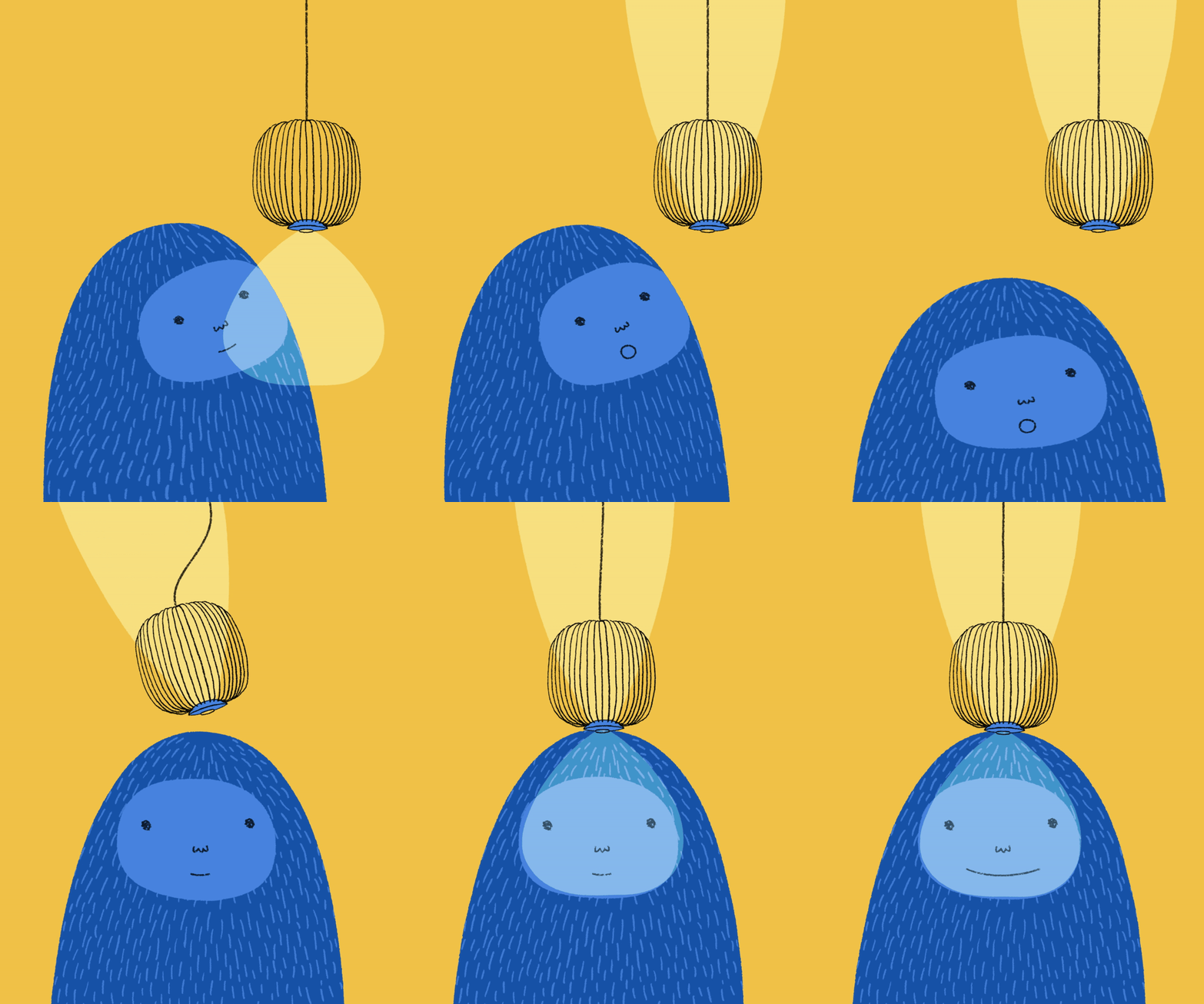
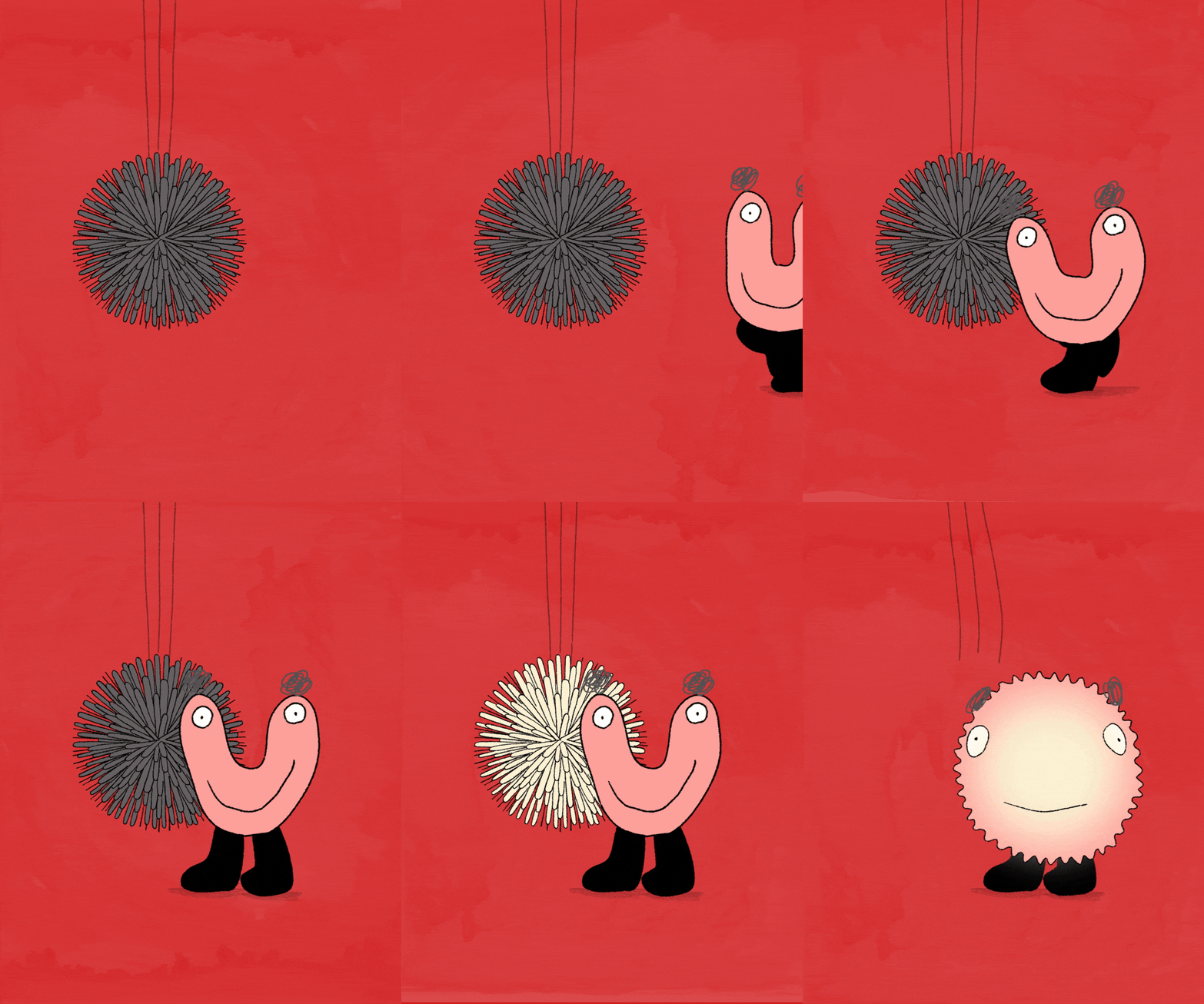
From these questions comes a series of short animated stories, dedicated to six Foscarini lamps – Binic, Madre, Sunlight of Love, Spokes, Fleur and Eolie – and populated by shy, curious, playful characters. The lamps become companions and interlocutors: presences that observe, welcome, listen and spark the imagination. There is no spectacle, no noise: everything unfolds in the details, in suspended moments, in subtle movements.
“I was always terrified of the dark as a child. Turning on a light was a huge relief: it made the monsters disappear and calmed my imagination. I think those fears later influenced the way I tell stories today.”
Brian Rea
/ Artist
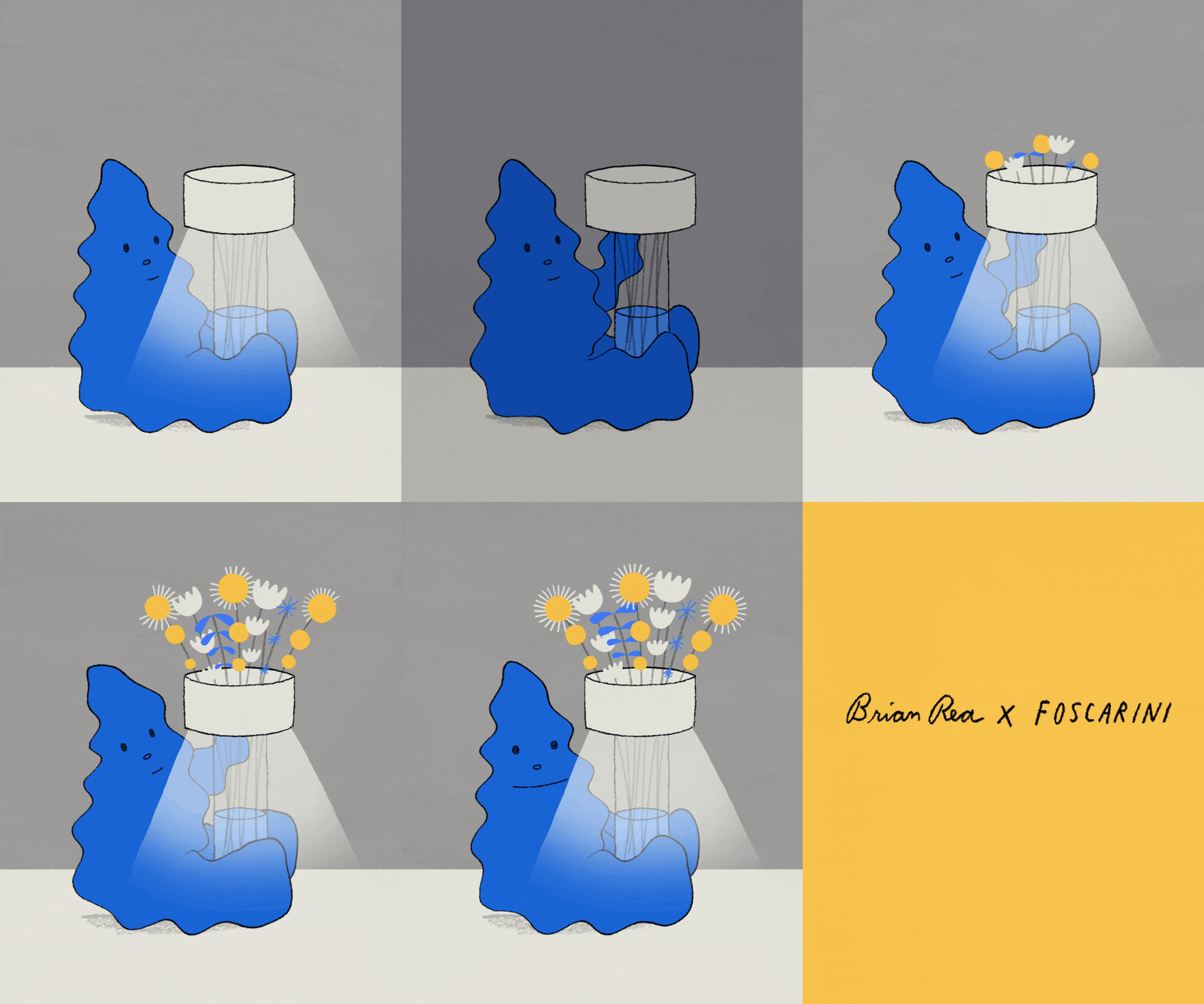
In a world that often shouts to capture attention, Brian Rea chooses the opposite path: one of delicacy, in perfect harmony with the character of Foscarini lamps. A light that does not overwhelm, but accompanies. An invitation to slow down and observe what happens, inside and around us, when a room begins to glow.
You move between illustration, animation, and storytelling with unusual naturalness. How would you describe your signature style in just a few words?
Restrained, but hopefully emotional, often highlighting the quiet moments.
Your characters are fragile, funny, emotional, profoundly human. What originally drew you to this kind of intimacy rather than to grand narratives or heroic protagonists?
I’ve always been a pretty emotional person (I love a good cry from a movie) but it took me a long time to discover these are the types of images I like to create too. I’ve been illustrating the Modern Love column for now 15 years, so by reading the column each week (a column about life and love and relationships in all the forms it can take) I suppose I developed a better understanding of how to present “feelings” in the work and elicit an emotional response from the viewer.
Which cultural or artistic references were most influential during your education and career?
There were so many at different stages of my career, but lifelong inspiration has always come from Ben Shahn and Saul Steinberg. Film makers such as Roy Anderson and Jaques Tati have also been a big influence on me too, particularly on pacing and the joy, pain and humor of quietness or the human condition.
Can you walk us through your creative process, from the first idea to the finished illustration or video?
It always begins with writing before sketching—I tend to make lots of lists. These lists then lead to sketches. I draw everything by hand but at times I’ll use Photoshop to refine color or make simple adjustments. In this collaboration, I selected six lamps that seemed to have unusual or playful visual characteristics in some way. Then I created a mini story for each one, with a central character to highlight something about each lamp. I worked with a wonderful animator named Bruno Persico, who then brought these stories to life.
You often blend tenderness with a subtle, quiet humor. How did this tone become your way of looking at the world?
I grew up in a big, loud family of wonderful storytellers. But I was too shy to tell stories with words, so I just listened. Eventually, I figured out I could share my little moments much better with pictures instead—usually one panel at a time or in short animated stories. And that became my way of connecting to the world.
You’ve said that some stories “arrive” almost fully formed, while others resist and unfold slowly. How do you understand when a narrative is finally complete?
When I can’t see any of the struggle or when the drawing (or animation in this case) feels effortless and fluid, and the timing is right on the animation, then it’s probably complete. Maybe I get a smile after looking at it—that’s another sign.
In this series for Foscarini, the lamps feel like living presences: they accompany, listen, console, spark imagination. How did you build this relationship between light and character?
I spent some time thinking about my complicated relationship with light. I was tremendously afraid of the dark as a child, and turning a light on was a big relief for me—it made the darkness and all the monsters I imagined that were in it go away. I now live in Sweden, which can be dark for long stretches of the winter, and I hear my children expressing worry about the same “monsters” I did as a child. But imagine if those characters in the dark were curious about light too—what would these characters look like? How would they respond to these lamps? This series hopefully expresses some of that surprise and joy and that connection that many of us share when the warmth of a lamp is turned on.
Was there a specific lamp or video in the series that surprised you the most or revealed a personality you didn’t expect?
The Binic lamp was certainly the most direct to personal experience—in it I see my children playfully sitting and staring, like a mirror to my kids. But I love sunlight (especially during the winters here), so the Sunlight of Love lamp was one that was really fun to work on. My two young children loved the Eolie lamp animation, probably because the character is doing something he shouldn’t do.
One of the beautiful aspects of this series is that nothing is loud or spectacular. The emotion lives in tiny gestures, pauses, glances. What did you discover by working at such an intimate scale?
I’m a big fan of the quiet power of little moments and trying to capture that in an image. The world can be a loud and intense experience—everything shouting at you for your attention. But these lamps don’t do that, and that’s what makes them stand out. It was important that the animations reflected that same tone as the lamps.
Did any of the stories take an unexpected turn during the process?
I don’t believe so. We sketched things out pretty clearly and I had a wonderful collaboration with Bruno Persico on the animation side of things. Valeria and her team at Foscarini were great, and I’m grateful for the creative room and the trust they gave us to tell our stories about their wonderful lamps.
Which video from the series is your favorite, and why?
As I mentioned, the Sunlight of Love lamp was probably my favorite. The name alone makes me smile, but so does the lovely animation that Bruno created for it. Hopefully it does for others too.
Finally: what does creativity mean to you?
Finding something you love more than anything else in the world and make it your life’s work every day without compromise.
Discover the full series on the @foscarinilamps Instagram channel, and explore all the works from the What’s in a Lamp? project, where international artists are invited to interpret light and Foscarini lamps.

Silent images, domestic settings, a light that sparks unexpected possibilities. For What’s in a Lamp?, Marianna Tomaselli creates a series of illustrations in which Foscarini lamps become the starting point of a visual narrative, where light generates relationships, atmospheres, and subtle shifts in meaning.
A project by Massimo Gardone for Foscarini investigates the potential of artificial intelligence as a tool of expression, but always guided by a sensitive, conscious human touch. A story in which technology is a means of amplifying the human gaze, where settings generated by AI contain lamps photographed in their physical presence.

For What’s in a Lamp?, Spanish illustrator and art director Jorge Arévalo portrays Foscarini’s lamps and designers with his unmistakable style: essential lines, bold colours, and graphic elegance. A suspended dialogue between the object of design and the mind that imagines it.
For the What’s in a Lamp? project, Italian artist Beppe Conti imagines lamps not simply as sources of light, but as instruments that reveal the invisible. In his digital collages, fragments and hidden layers emerge from the darkness, shaped by the light of Foscarini lamps into dreamlike spaces.

With his unmistakable style defined by essential shapes and bold colors Peter Grundy transforms Foscarini lamps into visual archetypes of the concepts and values that define the brand’s identity for the editorial project What’s in a Lamp?. An exercise in synthesis and vision that invites us to see light not only as a source but as meaning itself.

Helen Musselwhite’s artistic universe is made of paper cutouts, folds, and shadows that narrate the wonder of the natural world. For What’s in a Lamp?, the artist reinterprets some of Foscarini’s lamps, transforming them into dreamlike paper landscapes.

After the interpretation of the luminator which led to the Chiaroscura lamp, Alberto and Francesco Meda rethink a lighting classic for Foscarini: the chandelier.

Francesca Lanzavecchia sa esattamente cosa vuole: progettare oggetti che non lasciano indifferenti. Non si tratta solo di estetica, ma di quell’intensa risonanza emotiva che i suoi progetti devono saper evocare. In un’intervista racconta Allumette e Tilia, i due chandelier che ha progettato per Foscarini.

Mattia Cimadoro and Giuseppe Mauro, who lead Dordoni Studio, talk in this interview about Etoile: a project that embodies an ethereal lightness and a restrained yet confident elegance, combined with a discreet and sophisticated ambient light.
Double event with Foscarini at Milan Design Week 2025: join us at Euroluce, Fiera Milano, and explore our showroom Foscarini Spazio Monforte.